

Divine Descent: The Ganges Sculpture of Mahabalipuram
Exploring Mahabalipuram’s Descent of the Ganges: India’s Largest Open-Air Rock Relief
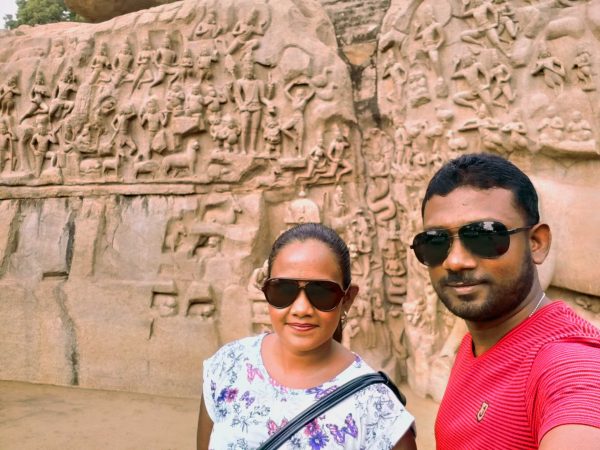
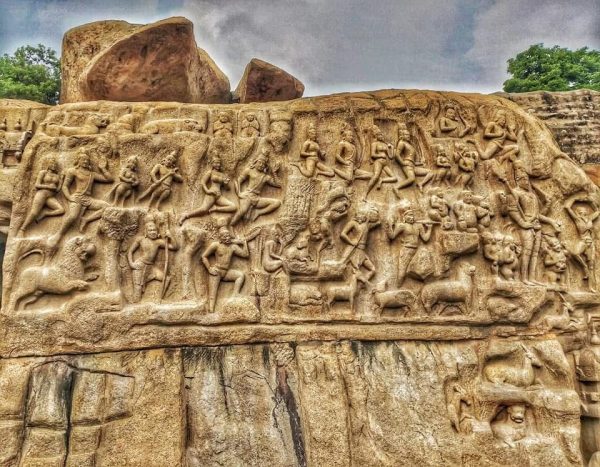
The Descent of the Ganges (also known as Arjuna’s Penance) is a magnificent open-air rock relief located in Mahabalipuram (Mamallapuram), Tamil Nadu, India. It is one of the most famous monuments of the Pallava dynasty, dating back to the 7th century CE, during the reign of King Narasimhavarman I (630–670 CE).
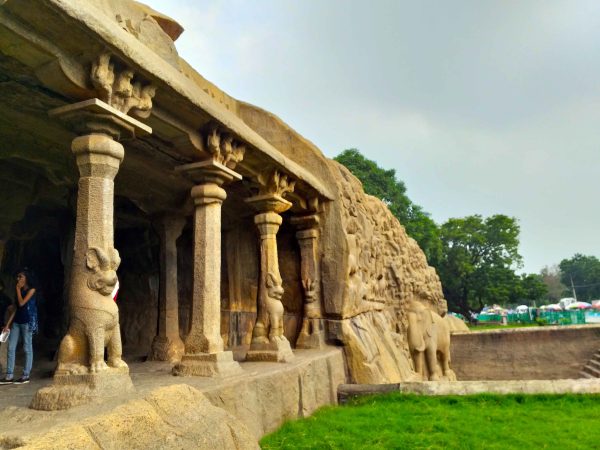
Key Features:
-
Monolithic Rock Carving
-
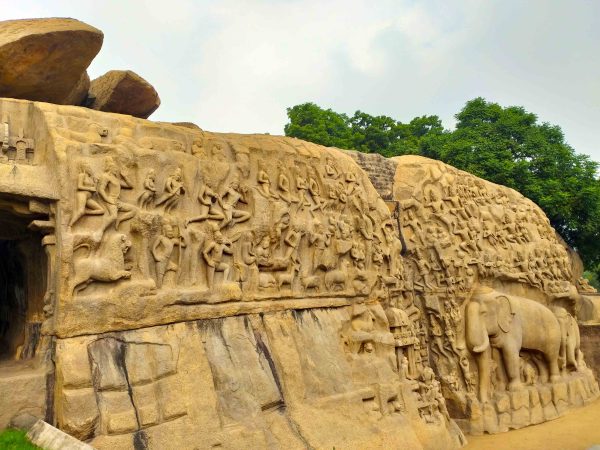
The relief is carved on two massive granite boulders, standing about 30 meters (98 feet) long and 15 meters (49 feet) high.
-
It depicts scenes from Hindu mythology, particularly the descent of the sacred River Ganges to Earth through the penance of Bhagiratha.
-
-
Two Interpretations
-
Descent of the Ganges: Shows Bhagiratha’s penance to bring the Ganges from heaven to purify the souls of his ancestors.
-
Arjuna’s Penance: Some scholars believe it represents Arjuna (from the Mahabharata) performing austerities to obtain Shiva’s weapon, the Pashupatastra.
-
-
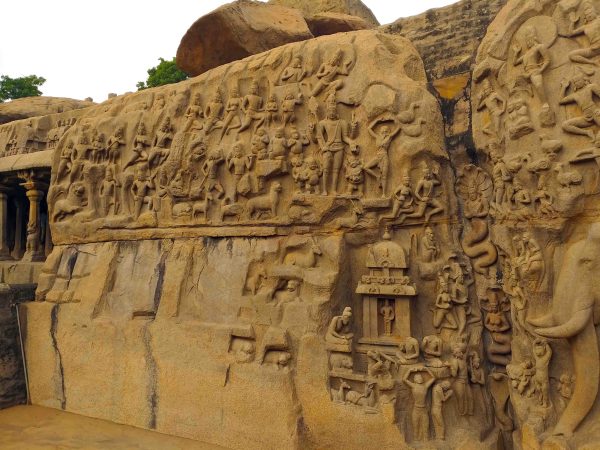
Central Crack (Symbolic of the Ganges)
-
A natural cleft in the rock was ingeniously used to represent the flow of the Ganges.
-
During festivals, water was likely poured down this cleft, simulating the river’s descent.
-
-
Rich Sculptural Details
-
Features numerous deities, celestial beings, animals, and ascetics.
-
Includes a standing figure of an ascetic (possibly Bhagiratha or Arjuna) in a yogic posture.
-
Elephants, monkeys, and lions are depicted in lively poses.
-
A cat standing on one leg (mocking ascetics) is a famous humorous detail.
-
-
UNESCO World Heritage Site
-
Part of the Group of Monuments at Mahabalipuram, recognized by UNESCO in 1984.
-
Significance:
-
A masterpiece of Pallava art, showcasing their expertise in rock-cut architecture.
-
Blends religious narrative with artistic grandeur.
-
Demonstrates the transition from rock-cut to structural temples in South India.
R
Artistic and Historical Significance:
- Pallava Art: The “Descent of the Ganges” exemplifies the high artistic and sculptural achievements of the Pallava period (6th-9th centuries CE). The naturalistic poses and individualized features of the figures are remarkable.
- UNESCO World Heritage Site: As part of the Group of Monuments at Mahabalipuram, this relief was recognized by UNESCO in 1984 for its outstanding universal value.
- Engineering Marvel: The sheer scale of the carving on the existing rock face highlights the exceptional craftsmanship of the Pallava artisans. There’s evidence suggesting that water may have once flowed down the natural cleft from a storage tank above, creating a dramatic representation of the river’s descent during special occasions.
Share this article

Written by : thetraveldiary
Follow us
Latest articles
August 2, 2026

August 2, 2026
